
.svg)
Flexible benefit cards: a game-changer for HR tech in Spain
500,000
homeowners communities managed
80%
of property managers in Spain using it
40%
reduction of banking cost for communities
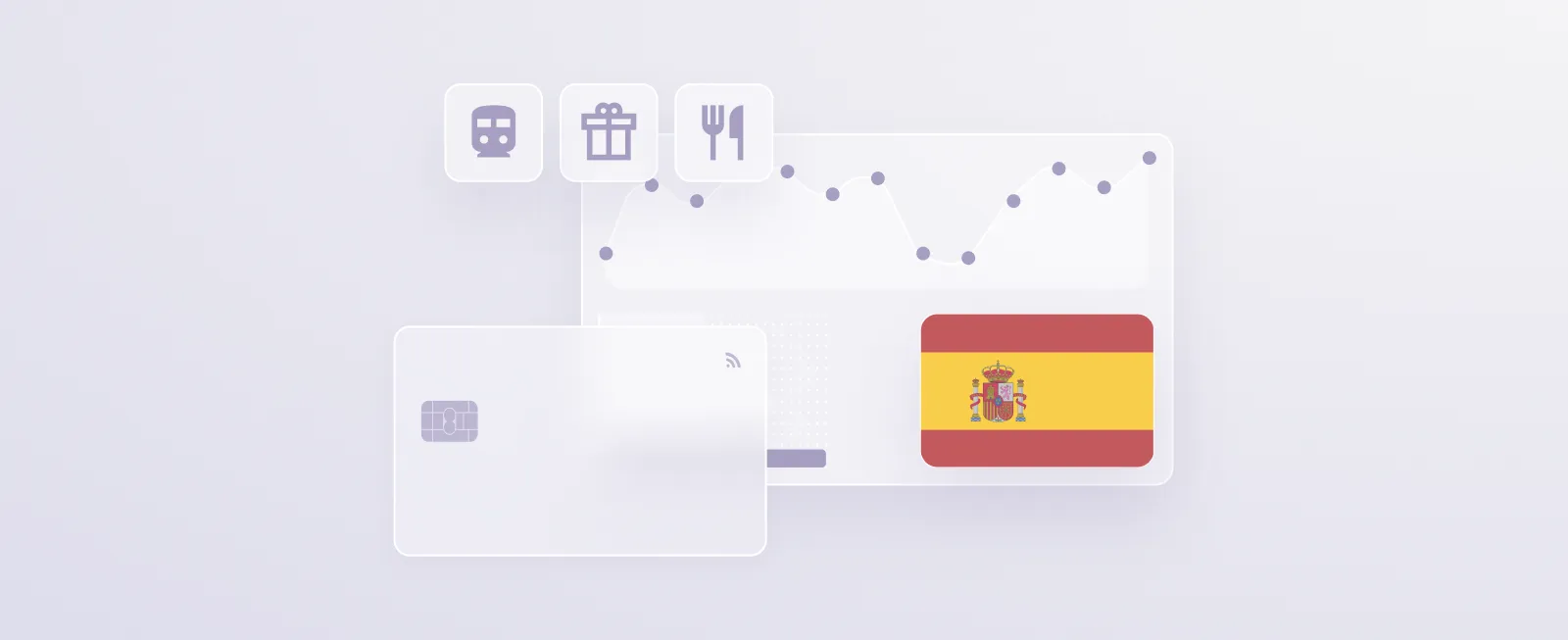

Flexible compensation has long been a pillar of employee retention and engagement in Spain. Meal vouchers, transport passes, and childcare subsidies help companies retain talent while maximizing tax efficiency. What is changing today is not the benefits themselves, but how they are delivered.
Paper-based benefits and closed-loop cards are giving way to flexible compensation cards, creating new opportunities for HR tech platforms — and introducing complex regulatory requirements that demand precise control.
The Spanish framework: attractive but highly regulated
Spain’s tax framework treats employee benefits generously, but under strict conditions. Under the Personal Income Tax Law (Law 35/2006), certain benefits are exempt from personal income tax (IRPF), creating savings for both employees and employers. For example:
- Meal vouchers: tax-exempt up to €11 per working day.
- Transport passes: tax-exempt up to €1,500 per year.
- Childcare services and professional training: fully exempt if regulatory requirements are met.
The catch is that benefits must be nominative, non-transferable, and non-refundable. Employers must keep meticulous records to meet AEAT requirements. Non-compliance can result in losing exemptions and incurring penalties. As a result, HR teams face a dual challenge: offering benefits employees value while strictly complying with regulations.
The HR challenge
HR teams in Spain know these pain points well. Managing multiple benefit categories and daily and annual limits, while tracking eligibility and preparing audit-ready reports, can feel like running a second payroll cycle. Manual processes introduce errors, reduce adoption, and increase compliance risk. Chasing receipts, controlling spend, and generating audit-ready reporting is exhausting and time-consuming.
Swan-powered flexible compensation cards change the game. Spending rules are enforced at the point of payment. If an employee attempts to exceed the daily limit, the transaction is automatically declined. Payments are categorized and logged in real time, making reporting seamless and audit-ready. In this setup, HR teams get full visibility and control without manual overhead, while employees enjoy immediate, flexible access to their benefits in a simple digital experience.
HR platforms are in a privileged position
HR platforms are already at the center of the employee experience.
Payroll, contracts, time-off requests: these are daily touchpoints. Embedding benefits cards within the same platform extends this central role into compensation and wellbeing. For employers, it consolidates management into a single trusted tool. For employees, it provides access to benefits from the platform they already use.
The upside for platforms is tangible: they can create stickier experiences, open new revenue streams, and stand out by offering fully compliant and tax-efficient benefits programs that meet the European standard.
Embedded banking as an enabler
This is where Swan’s embedded banking infrastructure makes the difference. Platforms can launch fully customized, compliant benefits cards without taking on licenses or regulatory burden. Swan provides the payments infrastructure, enforces category-based rules, and keeps transactions audit-ready and aligned with AEAT compliance expectations.
Meanwhile, platforms can focus on building intuitive, engaging experiences, such as approval workflows for top-ups, real-time notifications when limits are exceeded, and budget dashboards by employee and team.
By integrating Swan-powered benefits cards, HR software turns complexity into a growth opportunity. Employees get modern, easy-to-use benefits. HR teams are freed from administrative burden. And platforms expand their role as the core system for employee engagement and financial management.
Looking ahead
Flexible compensation in Spain is growing. Employees expect digital, intuitive, frictionless benefits, while companies demand solutions that are efficient and compliant. Benefits cards are at the center of this evolution.
For HR platforms, the time to act is now. With the right infrastructure, offering benefits cards in Spain stops being a regulatory burden and becomes a strategic lever to drive engagement, adoption, and growth.

Summary
Customer stories
How Europe’s leading business platforms use Swan
.svg)
.svg)


.svg)


.svg)



%201.svg)


500+
Lorem ipsum dolor sit
Lorem ipsum dolor sit amet, consectetur adipiscing elit.
.svg)
500+
Lorem ipsum dolor sit
Lorem ipsum dolor sit amet, consectetur adipiscing elit.
500+
Lorem ipsum dolor sit
Lorem ipsum dolor sit amet, consectetur adipiscing elit.
To use Apple Pay you need a supported card from a participating card issuer. To check if your card is compatible with Apple Pay, contact your card issuer. Apple Pay is not available in all markets. View Apple Pay countries and regions. Features are subject to change. Some features, applications, and services may not be available in all regions or all languages and may require specific hardware and software. For more information, see Feature Availability.


